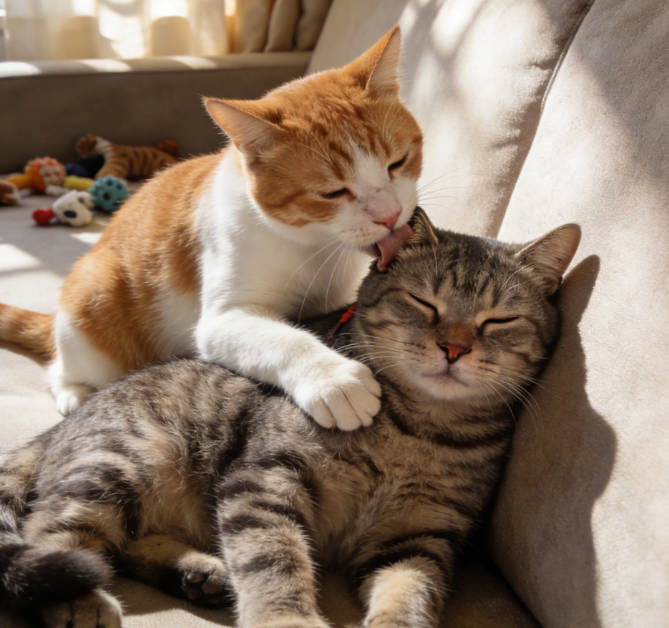
When you have two cats at home, you might notice they spend a lot of time either sleeping together or grooming each other. While these behaviors are very intimate, many cat owners enjoy watching them closely because it reflects strong social bonds. But why do cats like grooming each other?
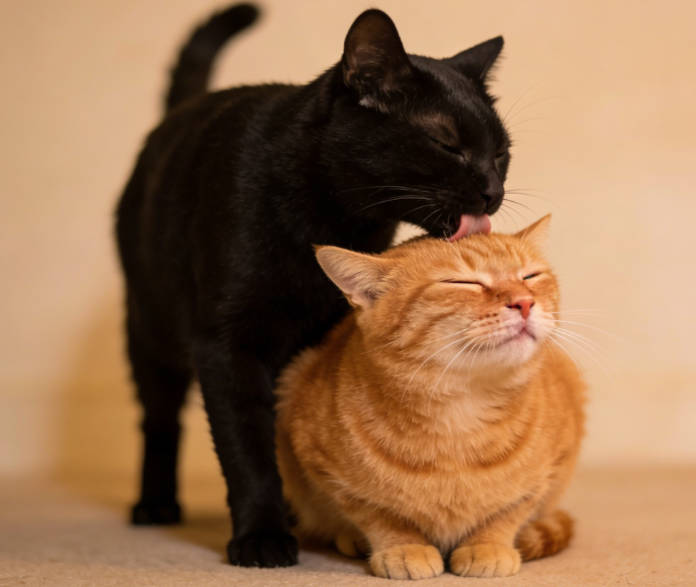
Mutual grooming, also known as allogrooming, is common across many animal species. Horses, bats, primates, birds, fish, large felines, and even bees engage in grooming behaviors to care for one another. Cats are not the only species that participate in these activities.
You might think cats are solitary animals. Indeed, in the wild, when food sources are scarce, cats maintain a solitary lifestyle. However, when food is abundant, cats form social groups. With social groups come social behaviors, including cohabitation, friendly interactions, and conflict management. So, mutual grooming among cats serves multiple purposes.
Social Bonding
Mutual grooming is a strong sign of social bonding. First, it shows that two cats share a friendly and close relationship. Studies indicate that cats with a familial relationship are more likely to groom each other than unrelated cats. So, if your cats are siblings, you are more likely to witness them grooming each other frequently, reflecting a tighter social bond.
Beyond friendliness, grooming can also reflect social hierarchy. If you notice that one cat consistently grooms another without receiving grooming in return, the grooming cat may hold a higher social rank than the other. This behavior subtly communicates social status within the group.
Scent Communication
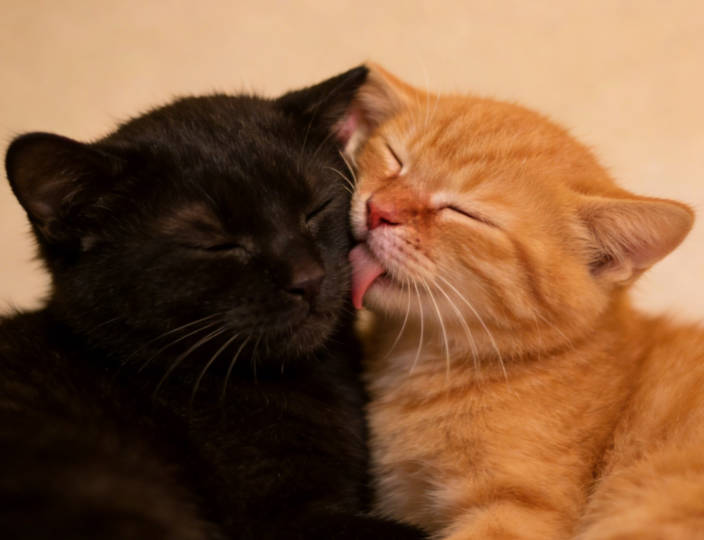
Scent plays a crucial role in a cat's life. Cats use scent to identify familiar cats within their group and to distinguish outsiders. Group cats usually accept only members of their own social unit and can be aggressive toward unfamiliar cats.
To maintain a consistent group scent, cats groom each other and engage in body contact. After close interactions, the cats' scents remain relatively stable and similar. This explains why when one cat comes home after being outside, other cats may sniff and investigate them closely. Any new scent can feel unfamiliar, sometimes even leading to aggressive behavior. However, after about a day, the group’s scent usually stabilizes again.
Stress Relief
Mutual grooming can also serve as a mechanism to relieve stress. Cats under tension may groom others as a way to calm themselves and manage anxiety. It is a natural coping behavior that helps regulate emotions within the group.
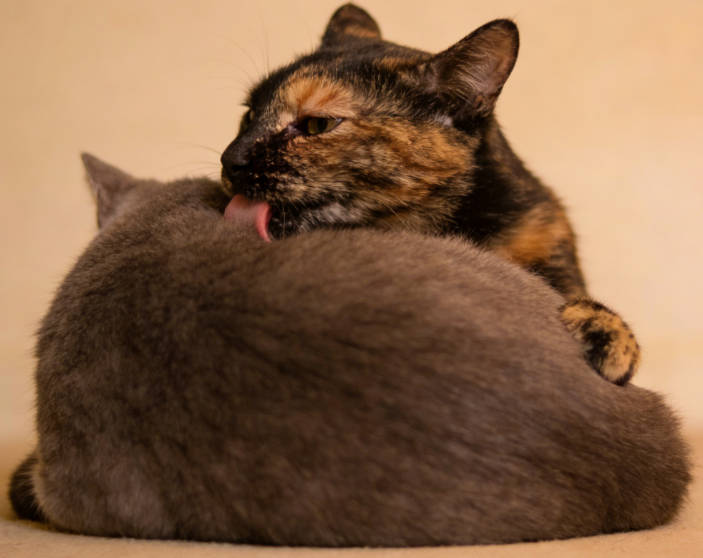
However, mutual grooming is not always peaceful. If one cat cannot relieve its negative emotions through grooming alone, it may lash out at the cat being groomed. This is why you might sometimes see cats grooming each other calmly, and in the next moment, one cat suddenly swats or bites the other. This behavior indicates that stress or negative emotions cannot always be resolved through grooming.
Conclusion
Mutual grooming between cats is not just about affection. While it reflects friendliness and close relationships, it also communicates social hierarchy, reinforces group scents, and can help relieve tension. Understanding these behaviors allows cat owners to better interpret their cats' interactions and provide an environment that supports social bonding, emotional well-being, and conflict management. Cats’ grooming behavior is complex and layered, revealing that behind these intimate actions lie deeper social and emotional purposes.
Comments (50)
Pet Lover
Great article! Very informative for pet owners.
Cat Parent
Thank you for sharing this helpful information!