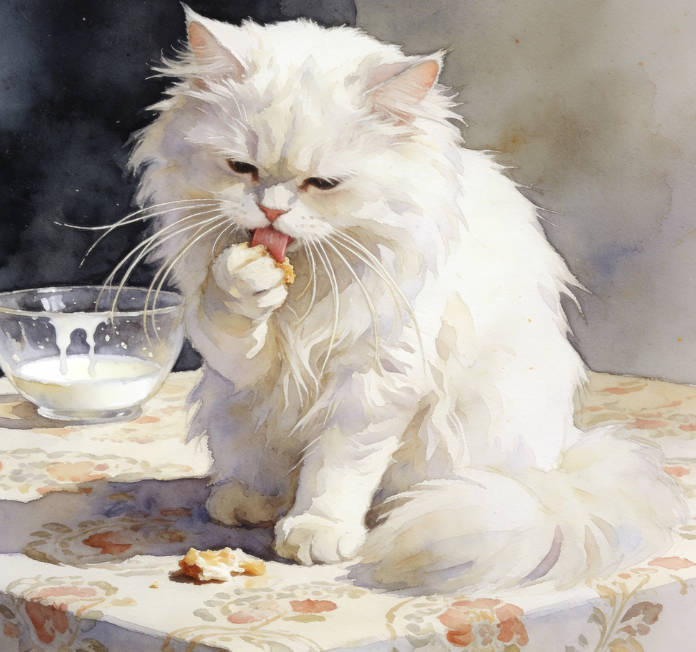
Many cat owners notice a familiar routine: right after finishing a meal, cats often sit down and immediately begin grooming themselves—licking their mouths, paws, and eventually their fur.
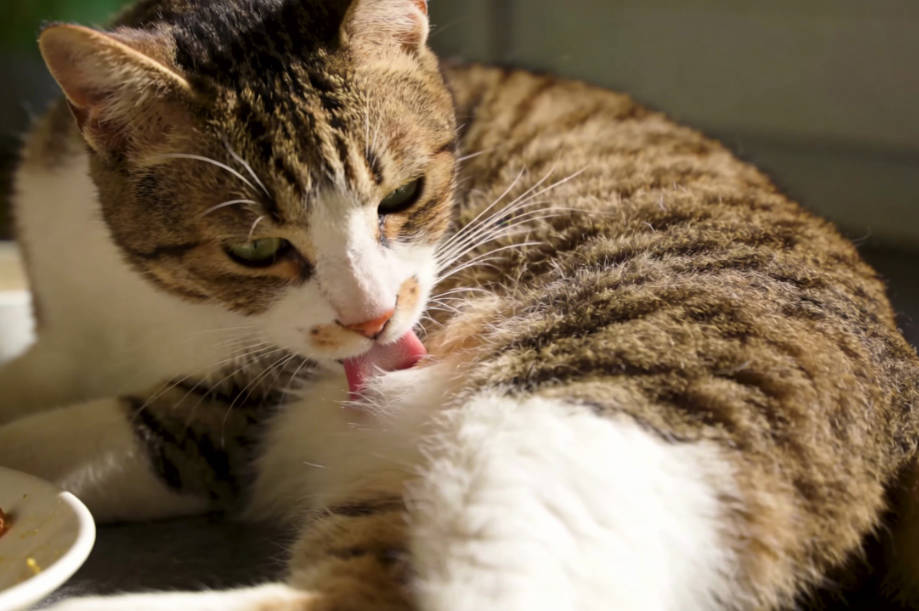
Grooming is one of the most instinctive behaviors in cats. It is also one of the first behaviors kittens learn from their mothers. But why does this grooming behavior happen so often right after eating?
Below, we explore the main reasons behind this natural feline habit.
Licking the Mouth: Cleaning Comes First
Before meals, some cats lick their lips when they see food being prepared. This behavior usually shows excitement or anticipation. After eating, lip-licking serves a more practical purpose.
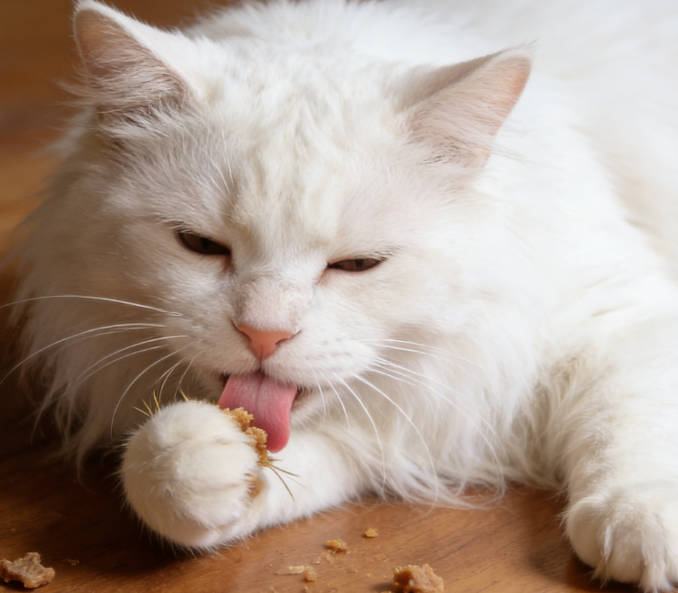
Cats lick their mouths to remove leftover food, oils, and odors around the lips and chin. Similar to how humans wipe their mouths after eating, cats focus first on the area most affected by food. The mouth is also the easiest place to clean because it does not require the use of paws.
If food residue is left on the fur, it can clog hair follicles, trap dirt, and potentially allow bacteria to build up over time. Regular mouth cleaning helps cats maintain healthy skin and good overall hygiene.
Licking the Paws: Washing the Face
After cleaning the mouth, cats usually move on to their paws. They lick their front paws carefully and then use them to wipe their cheeks, face, and areas behind the ears.
Once the head is clean, many cats continue grooming their paws thoroughly, including the spaces between the toes that are difficult to reach. This process helps remove food particles and odors that may have transferred during eating.
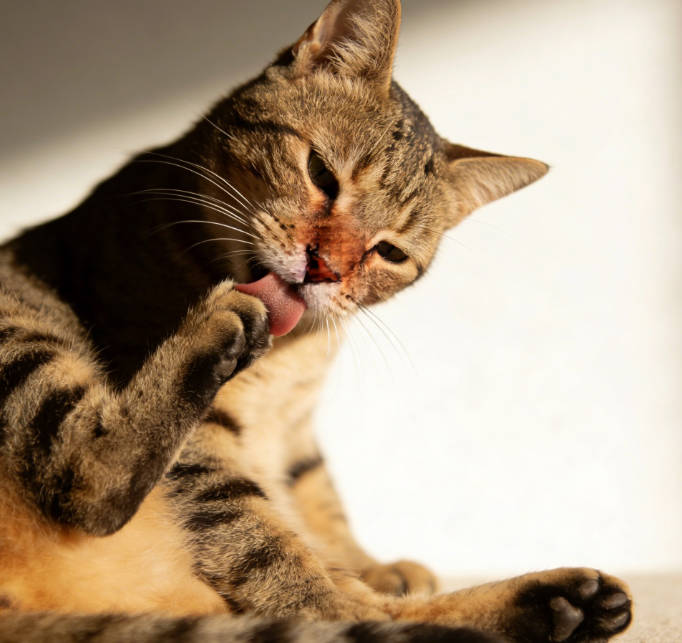
Why Do Cats Remove Food Smell?
This behavior is deeply rooted in survival instincts. In the wild, strong food odors on the body could attract predators. After eating, a clean coat helped cats stay unnoticed and safe.
Although modern house cats no longer face these threats, the instinct remains. Grooming after meals is still a natural way for cats to feel comfortable, secure, and clean.
Can Cats Really Clean Themselves Effectively?
Yes, cats are extremely effective at self-cleaning, thanks to their uniquely designed tongues. A close look at a cat’s tongue reveals a rough, sandpaper-like surface.
The tongue is covered with backward-facing structures called keratinized filiform papillae. These structures play an important role in both eating and grooming.
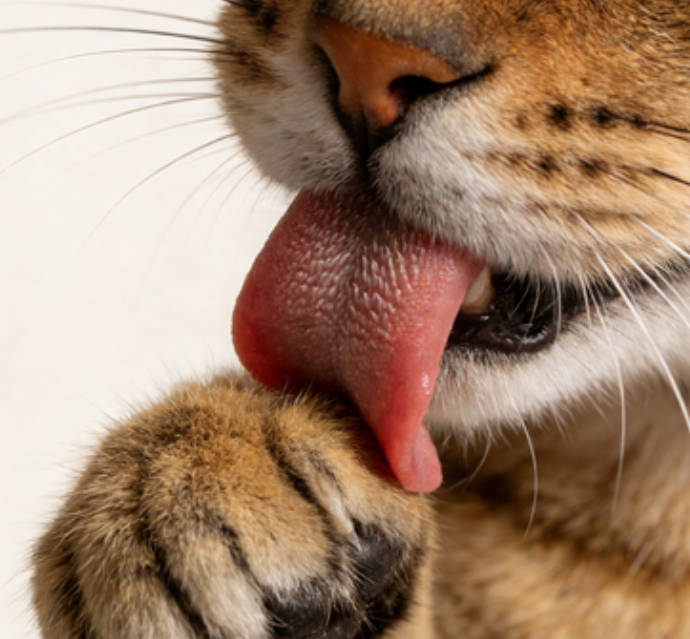
What Makes a Cat’s Tongue So Special?
First, the textured surface helps cats grip and move food efficiently while eating.
Second, the hardened papillae protect the tongue by acting like natural armor, reducing the chance of injury when chewing tougher foods.
Third, the tongue works like a built-in comb. The papillae easily remove dirt, loose fur, and debris while separating hairs and keeping the coat smooth and clean.
A Surprisingly Efficient Routine
High-speed camera studies show that a single grooming lick takes only about 0.25 seconds. Over time, these quick and repeated movements add up to hours of effective self-care each day.
Final Thoughts
Grooming after eating is not just a habit. It is a combination of hygiene, instinct, and biology working together. From cleaning food residue to removing odors and maintaining a healthy coat, this routine helps cats stay comfortable and clean.
The next time your cat starts grooming right after a meal, you will know that this behavior is a perfectly designed survival habit shaped by evolution.
Comments (50)
Pet Lover
Great article! Very informative for pet owners.
Cat Parent
Thank you for sharing this helpful information!