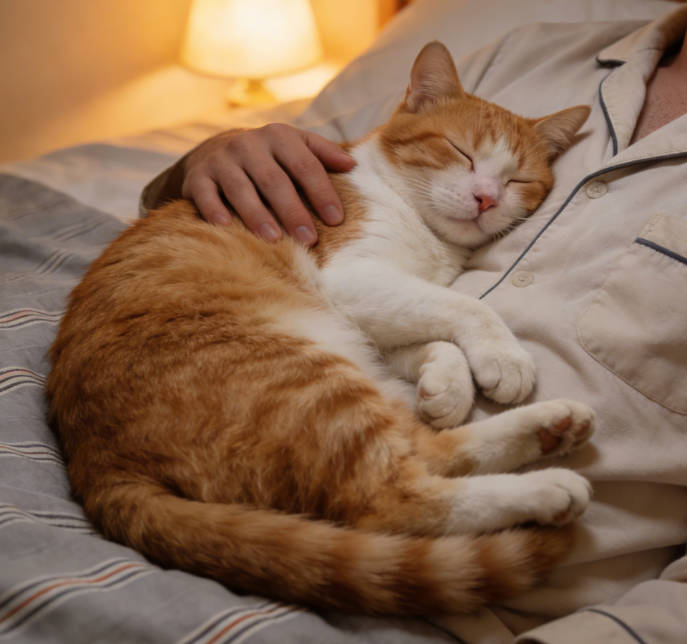
Why Does Your Cat Sleep on Your Chest?
Is It Pure Affection—or Is There Something More Going On?
Many cat owners have experienced a familiar (and sometimes slightly overwhelming) moment:
you lie down on your back, and before you know it, your cat climbs onto you and settles right on your chest—a true “feline weight” experience.
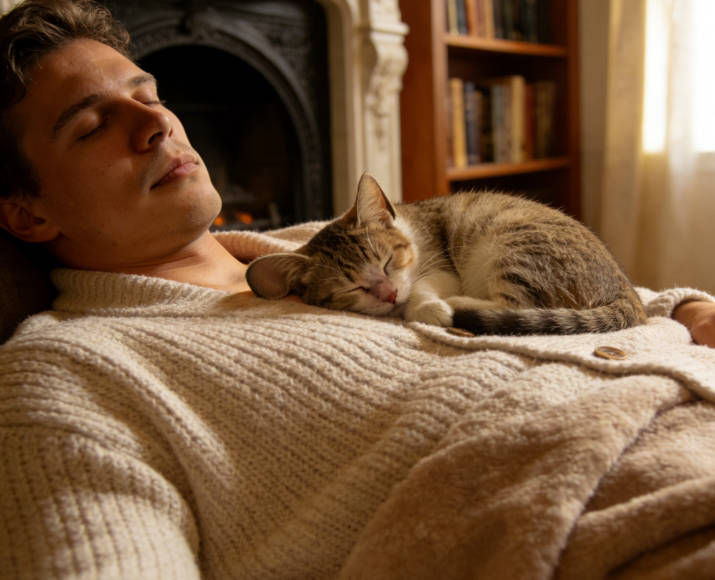
But why do cats love sleeping on your chest?
What does this behavior really mean?
The truth is, cats choose this sleeping spot for many different reasons. Broadly speaking, these reasons can be divided into positive motivations and potentially concerning signals. Let’s take a closer look at both.
Positive Reasons
1. Your Body Is Warm and Comfortable
A cat’s ideal resting temperature is slightly warm, and the surface temperature of the human chest is usually around 35–36°C (95–97°F). That makes it an attractive place for cats to relax.
Even if there are clothes or blankets between you and your cat, your chest still provides a soft, cushioned surface. It is also one of the flattest and most stable areas of the human body, allowing cats to lie securely without feeling unbalanced.
For many cats, your chest simply feels like a warm, cozy resting spot.
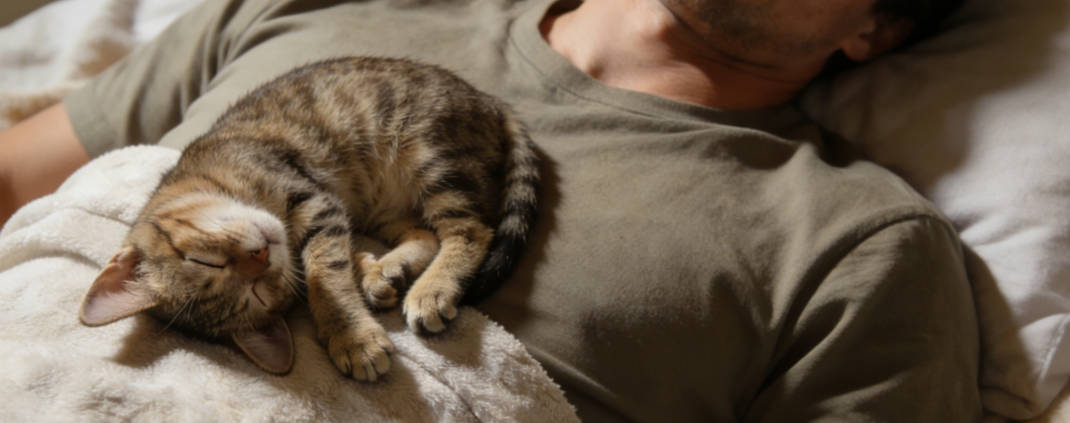
2. Your Cat Wants to Be Close to You
Cats are selective about who they spend time with. If your cat chooses to lie on your chest, it often means they feel comfortable around you and enjoy your presence.
This behavior suggests trust and emotional bonding. Your cat sees you as part of its inner circle—someone safe, familiar, and comforting.
In short, your cat feels at ease with you and wants physical closeness.
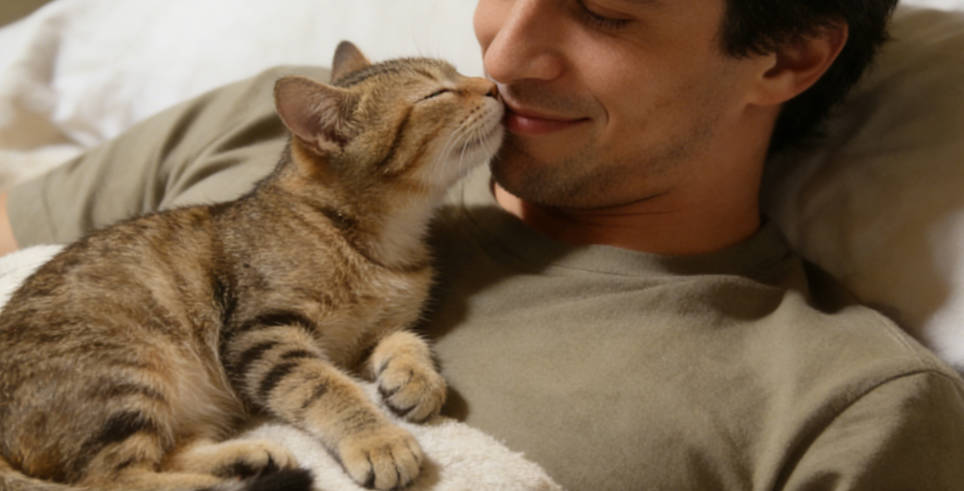
3. Your Heartbeat and Breathing Are Calming
When a cat rests on your chest, it can feel your heartbeat and hear your breathing. These rhythmic sounds tend to slow down when you are relaxed or asleep, creating a calming environment.
For cats, this sensation can be deeply soothing. It may remind them of kittenhood, when they slept close to their mother, comforted by her warmth, heartbeat, and breathing.
Most importantly, sleeping in such a vulnerable position shows deep trust. Cats are defenseless while asleep, and choosing your chest means they believe you will protect them from danger.
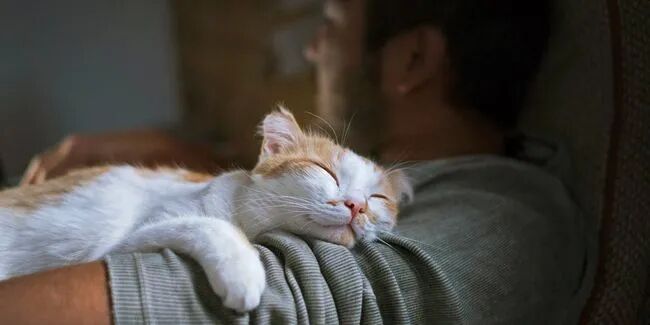
4. Sharing Scent and Strengthening Bonds
In the feline world, scent plays a crucial role in social bonding. Cats that belong to the same group often groom each other, blending their scents and reinforcing a shared identity.
When your cat sleeps on your chest, your scents mix naturally. This scent exchange helps your cat feel connected to you and reinforces the idea that you belong to the same “family group.”
In a way, this is your cat’s method of strengthening social bonds.
5. Learned Behavior Through Positive Reinforcement
Sometimes, the reason is simpler than it seems.
If your cat once lay on your chest and received positive reinforcement—such as petting, warmth, or soothing attention—it may associate that behavior with comfort and reward.
Over time, this connection encourages your cat to repeat the behavior, not out of manipulation, but because it has learned that lying on your chest leads to pleasant experiences.
Potentially Concerning Reasons
While chest-sleeping is often harmless and affectionate, sudden changes in behavior can sometimes signal underlying issues.
If your cat has never slept on your chest before and suddenly starts doing so frequently, it may be worth paying closer attention.
1. Territorial Behavior or Jealousy
Have there been recent changes in your household?
A new pet? Less attention than usual?
In multi-cat households, jealousy and competition can occur. A cat sleeping on your chest may be subtly asserting ownership—marking you with its scent and presence to signal to other cats that you are “its territory.”
Signs of jealousy may include:
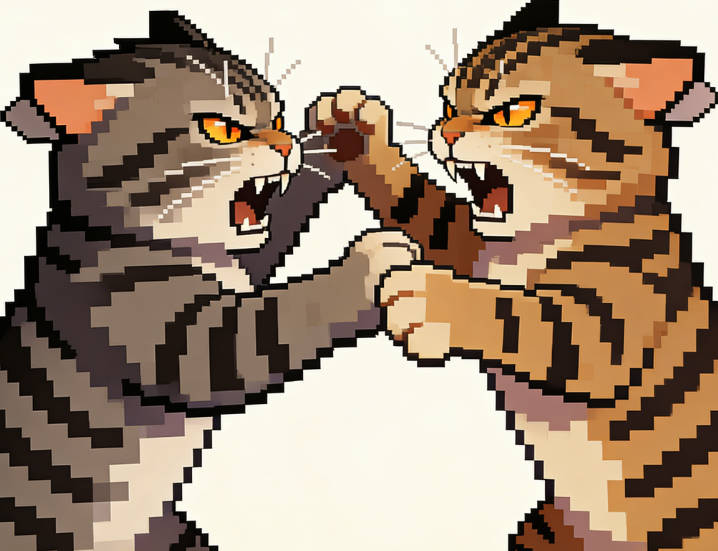
A. Aggressive behaviors
Hissing, scratching, biting, or sudden attacks toward people, animals, or even objects. Some cats may also scratch furniture or urinate outside the litter box.
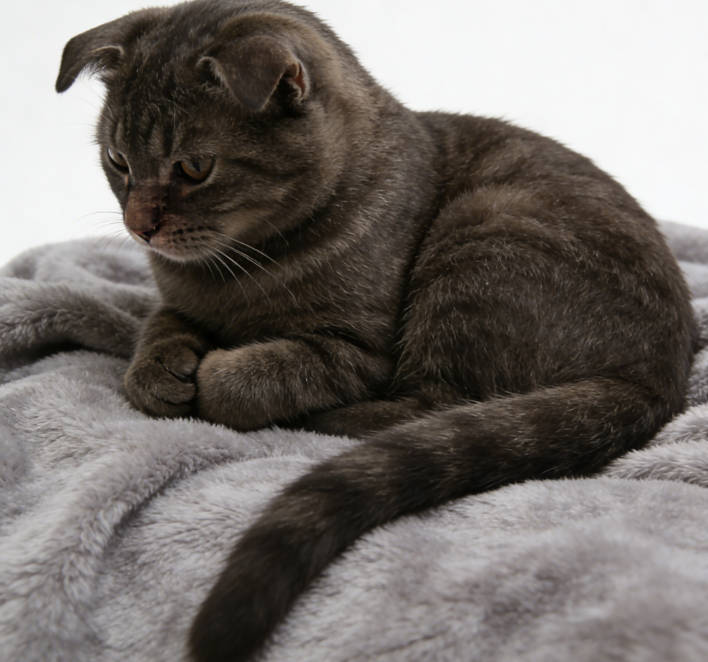
B. Withdrawal or low mood
Cats may appear unusually quiet, withdrawn, or less playful due to underlying insecurity.
If you suspect jealousy is the cause, it’s important to address the situation early. Ongoing tension can escalate conflicts in multi-cat households.
2. Anxiety or Emotional Stress
Anxiety is one of the most common reasons cats become overly clingy.
Other signs of anxiety may include:
* Restlessness or pacing
* Excessive vocalization
* Reduced appetite or loss of interest in favorite treats
* Over-grooming
* Unusual elimination or destructive behaviors
Cat anxiety should be taken seriously. Environmental stability, daily routines, sufficient stimulation, and appropriate attention from the owner all play important roles. In severe cases, anxiety can even lead to self-harming behaviors.
3. Pain or Physical Discomfort
Cats may seek extra closeness when they are not feeling well.
Pain—such as joint discomfort or post-surgical soreness—can make cats more dependent on warmth and reassurance. Curling up on your chest provides both physical heat and emotional comfort.
Physical discomfort often leads to behavioral changes. Cats may become more attached and seek protection and security.
For example, some cats recovering from surgery may actively seek their owners and only relax once they are resting on their chest.
4. Sensitivity to Changes in You
Some cats appear highly sensitive to changes in their owners—both emotional and physical.
Cats can sometimes detect subtle changes in routine, mood, or even body chemistry. If you have been feeling unwell or emotionally distressed and your cat suddenly becomes unusually attentive, it may be responding to these changes.
While this behavior is not mystical, it does highlight how closely cats observe and react to their environment—and to you.
Final Thoughts
There are many possible reasons why a cat chooses to sleep on your chest, but in most cases, the motivation comes down to comfort, safety, and connection.
As members of the same household group, cats often find reassurance in your warmth, scent, and presence. For them, your chest is simply a place where they feel calm, protected, and at home.
And sometimes, that’s all there is to it.
Comments (50)
Pet Lover
Great article! Very informative for pet owners.
Cat Parent
Thank you for sharing this helpful information!