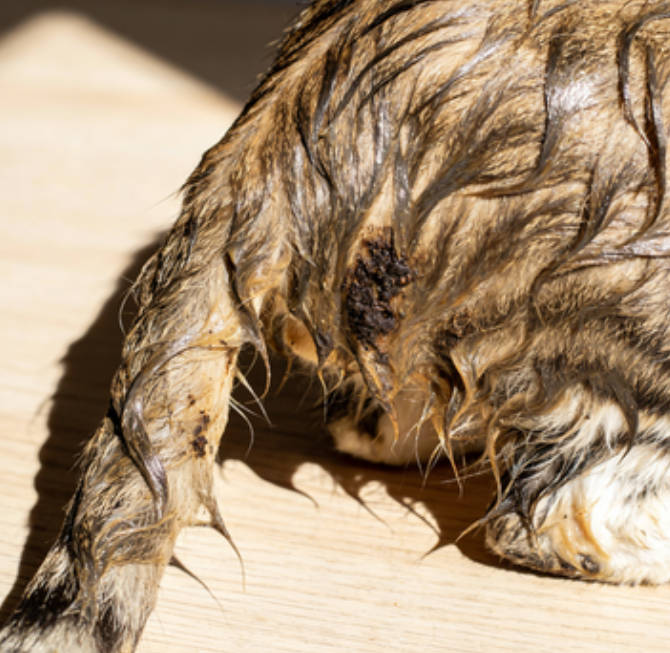
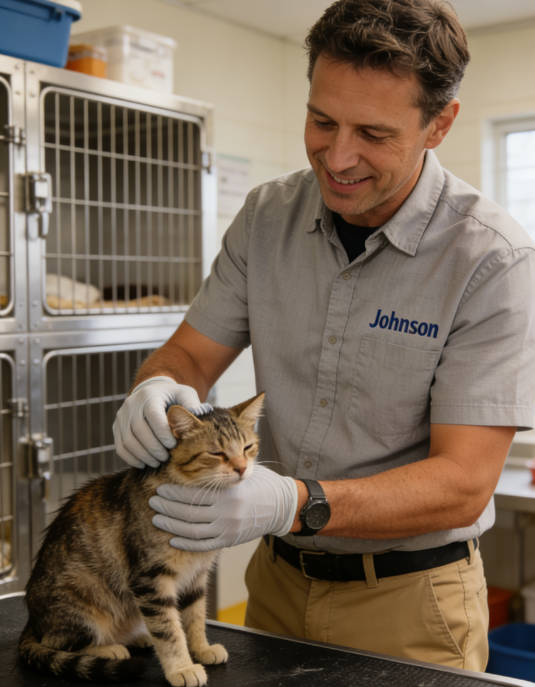
Have you ever noticed that your cat’s tail fur feels rough, clumpy, or greasy? When you part the hair, you may even find many small black particles stuck near the skin. Compared with the rest of the body, the tail looks noticeably oilier and dirtier. This condition is commonly referred to as “greasy tail,” and in many cases, it is related to what is known as stud tail.
So what exactly is stud tail? What symptoms does it cause? Why do cats develop this condition, and how can it be treated, managed, and prevented? Today, let’s take a detailed look at stud tail in cats.
What Is Stud Tail in Cats?
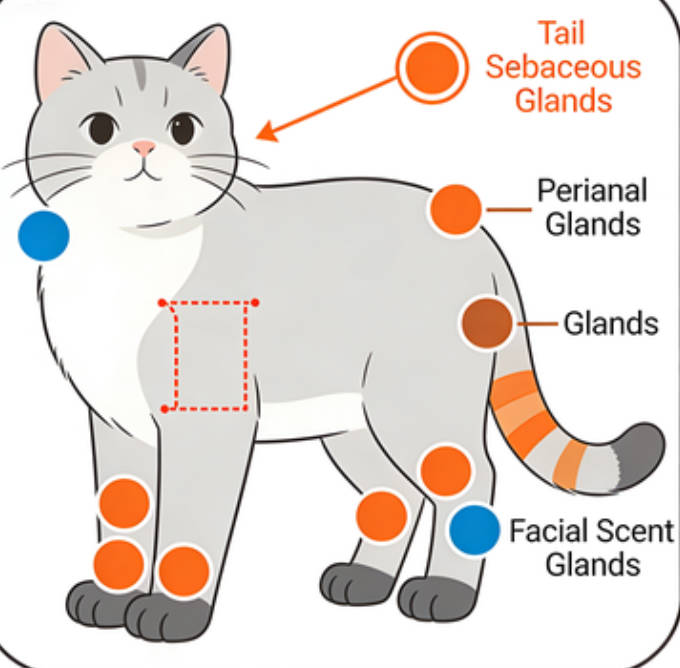
Stud tail, also known as tail gland hyperplasia, is a common condition caused by excessive secretion from the sebaceous glands. These oily secretions accumulate on the skin and fur along the dorsal (upper) side of the tail, especially near the base. Because of its appearance, it is often mistaken for a grooming or bathing issue, such as not being washed properly.
This condition is most commonly seen in intact (not neutered) male cats, but it can also occur in female cats and neutered males. Cats that are kept in confined environments, such as cages or small enclosures, tend to have a higher risk. This may be due to poor self-grooming habits, leading to the buildup and tangling of oil, debris, and shed hair. Over time, this can result in hair loss and increased pigmentation in the affected area.
The function of sebaceous glands in cats includes: ① Producing oily secretions used for scent marking ② Lubricating the skin and fur to prevent dryness
Common Symptoms
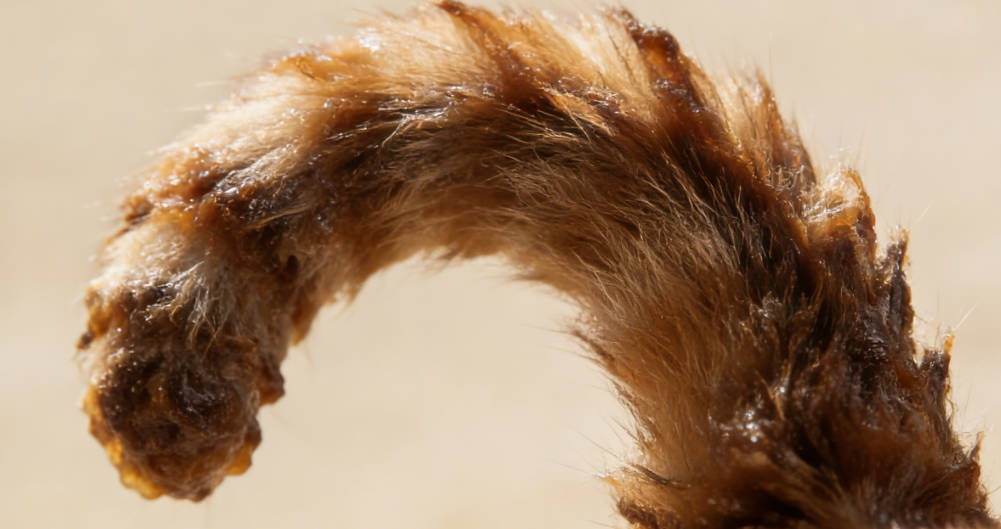
Typical symptoms include clumped fur along the dorsal side of the tail, with waxy, greasy debris adhering to the hair shafts. The skin in the affected area may appear darker than normal, and partial hair loss can occur. In many cases, the condition itself is not painful or itchy, and the rest of the skin appears normal.
Progression of the Condition:
- Early stage: The base and upper portion of the tail begin to produce excessive oil. About one-third to one-half of the tail fur becomes greasy and sticks together, giving it a dirty appearance. When touched, the tail feels noticeably oily and may have an unpleasant odor.
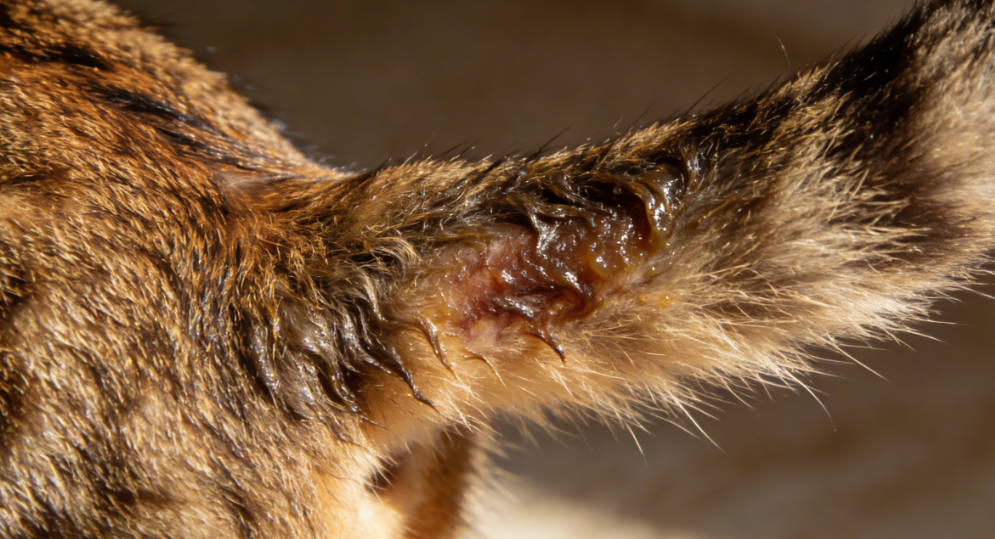
- Middle stage: Numerous small black dots, similar to comedones, appear around the hair follicles. These may gradually develop into yellow or black waxy material and may even form crusts.
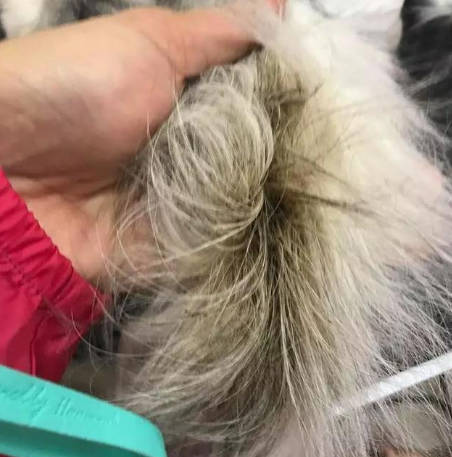
- Advanced stage: Hair loss occurs alongside redness, swelling, increased oil production, and discoloration of the affected skin.
- Secondary complications: If left unmanaged, secondary bacterial or fungal overgrowth may occur, leading to folliculitis, swelling, discharge, and in severe cases, inflammation involving a larger portion of the tail.
Important note: Before secondary complications develop, cats with stud tail usually do not show itching behavior. Once itching appears, it often indicates that secondary skin issues may already be present.
Why Does Stud Tail Occur?
There are three main contributing factors:
- Hormonal factors: Androgens play a key role in the development of stud tail. This condition is most common in intact adult male cats because higher androgen levels stimulate the sebaceous glands to produce excess oil. These glands are concentrated along the dorsal tail area, making this region particularly prone to oil buildup.
- Local skin hygiene issues: Poor hygiene around the tail area can contribute to the condition. If a cat cannot adequately groom its tail, oil, debris, and microorganisms can accumulate, blocking hair follicles and sebaceous ducts. This is more common in overweight cats who struggle to reach the tail, senior cats with reduced mobility, or some long-haired cats whose fur makes self-grooming less effective.
- Psychological and environmental factors: Long-term stress or lack of environmental enrichment may also contribute. Cats kept in confined spaces for extended periods, such as cage housing or restricted movement environments, may be more prone to excessive oil accumulation on the tail.
Treatment, Prevention, and Daily Care
■ Medicated bathing This is one of the most commonly used methods and works well for mild cases. Shampoos containing ingredients such as benzoyl peroxide can help reduce oil buildup when used carefully on the affected area.
■ Regular cleaning and oil removal Excess oil should be gently removed on a regular basis. Pet-safe cleansing wipes can be used daily to reduce oil accumulation and prevent clogged follicles. During baths, degreasing products designed for pets may also be helpful.
Regarding bathing cats, although some opinions suggest cats do not need baths, regular bathing can be beneficial. While cats groom themselves by licking, their cleaning ability is limited. In addition, daily litter box use means their paws frequently contact waste. Regular bathing benefits both cats and their owners. Cats that are rarely bathed may become increasingly resistant, making necessary bathing more stressful and risky in the long term.
■ Frequent brushing Regular brushing helps remove excess oil and debris. Some cats may miss certain areas during self-grooming. Senior cats, cats with other health issues, or cats that are less diligent groomers may need extra help from their owners.
■ Neutering Stud tail occurs more frequently in intact male cats due to androgen-driven oil production. Neutering can significantly improve greasy tail symptoms by reducing hormone levels. However, it may not completely eliminate the condition in all cases and is best viewed as a way to slow progression and reduce severity.
■ Maintaining a clean living environment Keeping your cat’s living area clean can help reduce the risk of stud tail by minimizing environmental contamination and oil buildup.
■ Dietary adjustments In some cats, excessive oil production may be related to diets that are too high in fat. Adjusting the diet to a more balanced nutritional profile may help reduce oiliness.
■ Medical management and advanced care In more severe cases, veterinary care may be necessary. This can include medical treatment or, in rare situations, more advanced interventions depending on the severity and response to routine care.
Conclusion
Greasy tail in cats is not a serious condition in most cases. Although it is often called “stud tail,” it is actually similar to common skin issues like blackheads or clogged pores in humans. It is a relatively common, everyday problem. There is no need for panic if it occurs. With proper cleaning, routine care, and appropriate lifestyle adjustments, most cats can be managed effectively and remain comfortable.
Comments (50)
Pet Lover
Great article! Very informative for pet owners.
Cat Parent
Thank you for sharing this helpful information!