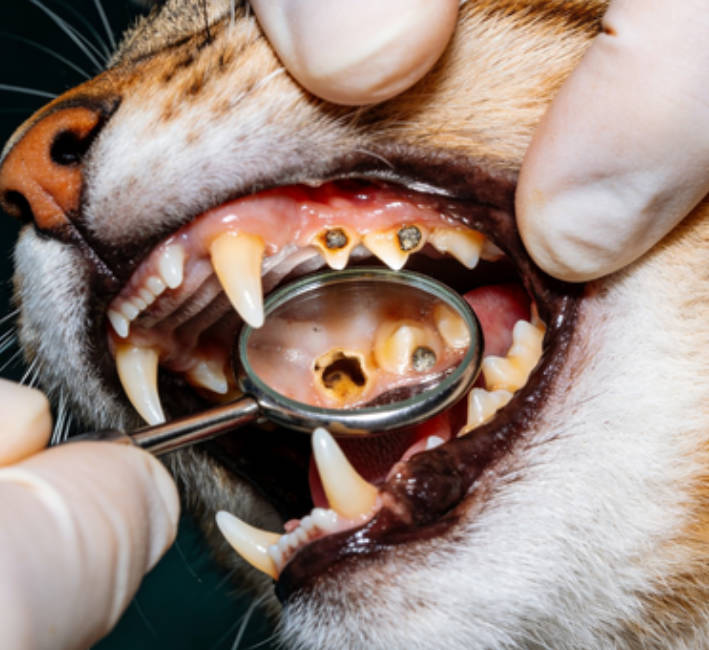
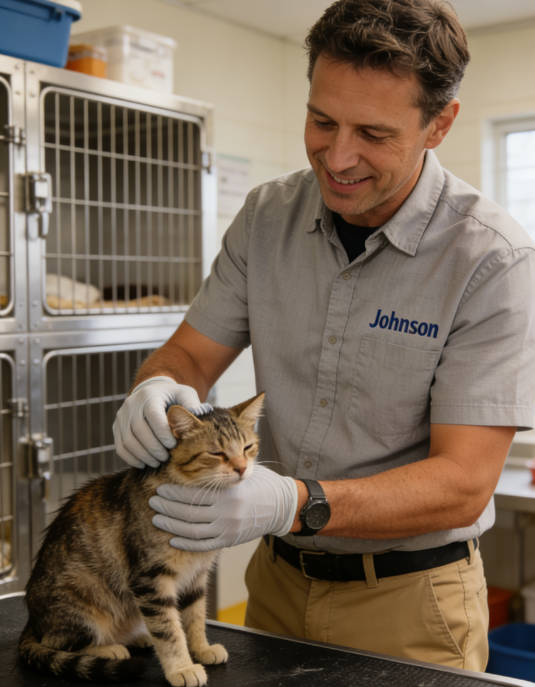
As pet ownership awareness grows, more cat owners are paying close attention to their cats’ oral health. Among all feline dental issues, one of the most common conditions is tooth resorption. For many owners, the first time they hear this term, it can sound quite strange: Why are my cat’s healthy-looking teeth being “resorbed”? Why do some veterinarians even recommend full-mouth extractions? Today, we’ll explore what tooth resorption is, its causes, signs, and what it means for your cat’s oral health.
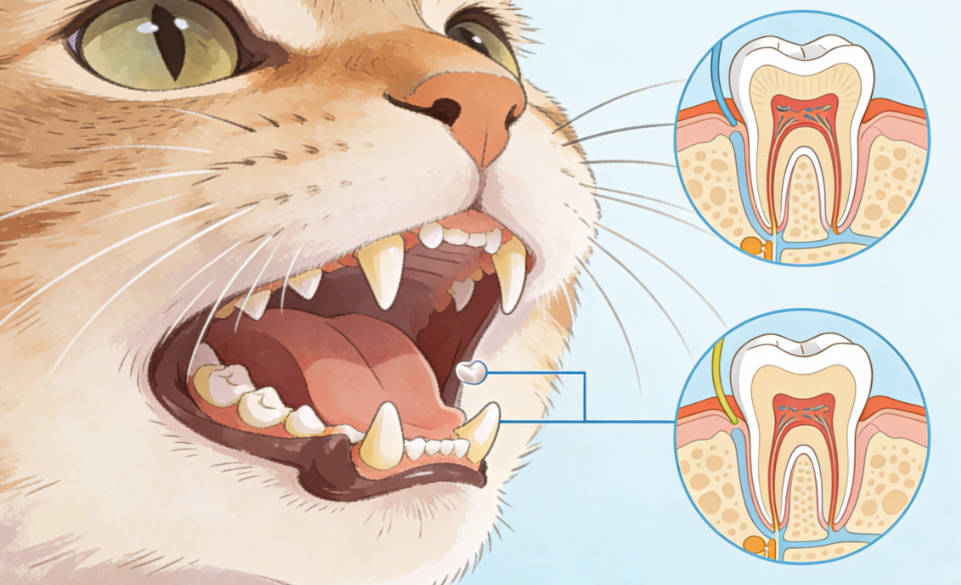
What is Tooth Resorption?
Cat tooth resorption (commonly called Tooth Resorption, TR) is a destructive dental condition caused by specialized cells called odontoclasts. Essentially, these cells mistakenly identify parts of the tooth as tissue to be removed, leading to the gradual breakdown of otherwise healthy teeth. Tooth resorption isn’t exclusive to cats—it has been observed in dogs, humans, and other rodents as well.
In cats, tooth resorption is considered the most common dental disease. Research suggests that approximately 28% to 68% of adult cats are affected, though prevalence varies depending on factors like region, breed, and age. It typically affects the buccal surfaces (cheek side) of premolars and molars, particularly the mandibular third premolars and molars, and the maxillary third and fourth premolars.
The American Veterinary Dental College (AVDC) classifies tooth resorption into five stages:
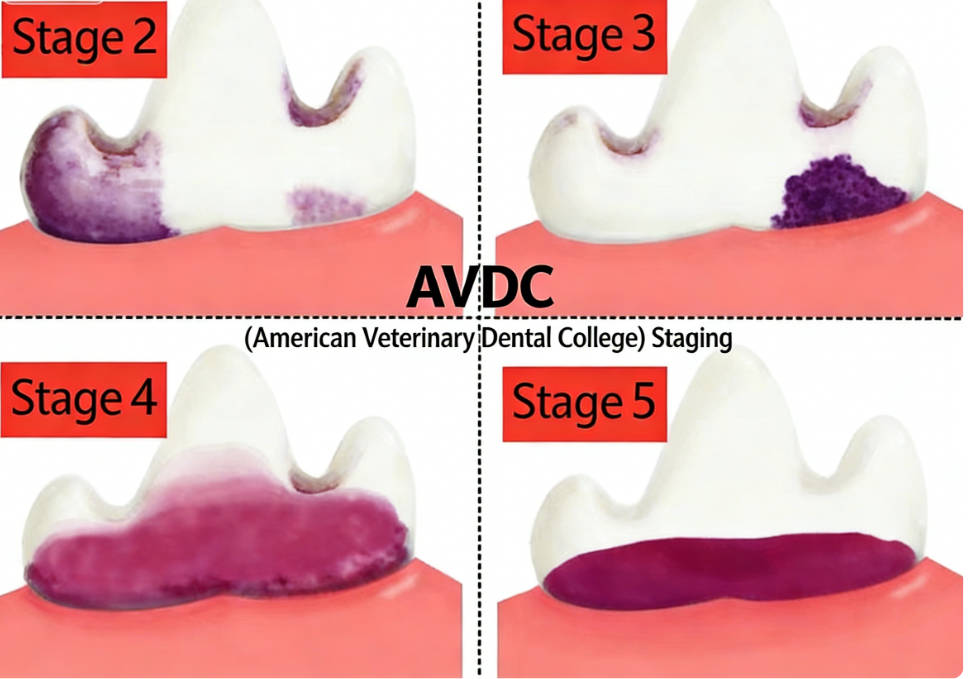
- Stage 1: Minor lesions, often less than 0.5 mm, confined to the enamel without reaching deeper tooth structures, making them very difficult to detect. • Stage 2: Lesions extend into the enamel but do not reach the pulp, which contains nerves and blood vessels. • Stage 3: Lesions reach the pulp; even gentle probing during anesthesia can cause the tooth to respond painfully. • Stage 4: Lesions extend from the root toward the crown; teeth may fracture, and gum tissue may swell around the root. • Stage 5: The crown is fully destroyed, and gums grow over the remaining root, effectively burying it.
Studies show that over 50% of cases occur in cats older than four years, mainly between four and six years of age. However, recent trends indicate a rising incidence in cats under two years old, likely due to increased veterinary care and awareness among owners.
Causes and Symptoms of Tooth Resorption
- Why does it happen?
Currently, the exact cause of tooth resorption remains unclear. Research suggests multiple contributing factors, including autoimmune responses, diet, periodontal disease, or trauma to the teeth. Some studies indicate that long-term intake of high doses of vitamin D may exacerbate tooth resorption.
- What signs should owners look for?
Many affected cats show no obvious symptoms. Some may drool more than usual, while visible signs can include red or inflamed gums, shortened teeth, small holes in the gums resembling cavities, or difficulty chewing. Food may fall from the mouth while eating, especially with harder foods, and cats may hiss or show abnormal movements due to discomfort.
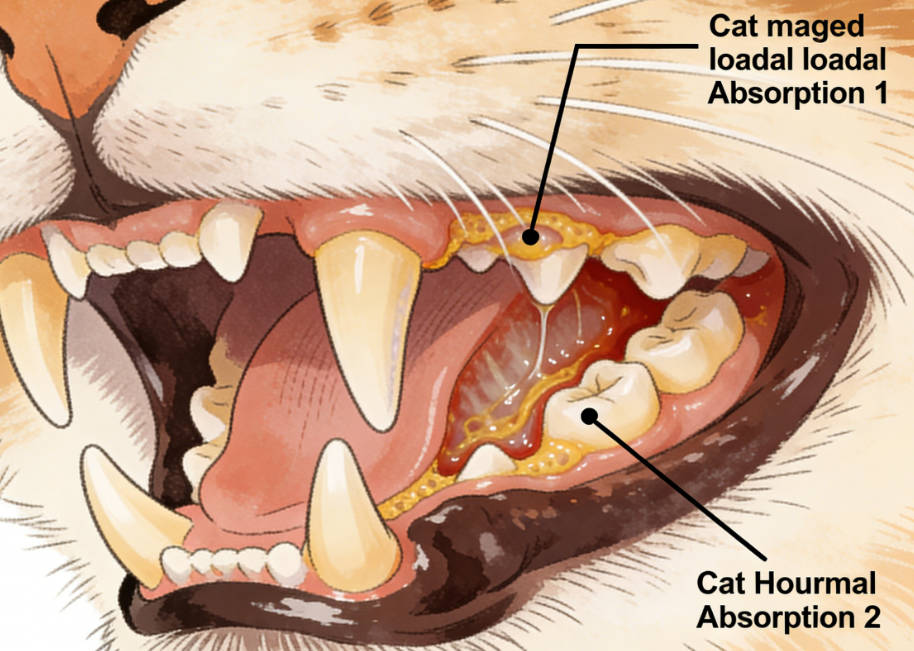
Tooth resorption can be categorized clinically into three types (source: Feline Medicine):
- 1. Type 1: Typically involves inflammation in the periodontal ligament near affected areas. The rest of the tooth may appear normal. If the lesion reaches the oral cavity, the tooth usually needs extraction. Type 1 lesions are thought to result from inflammatory mediators originating from pulp disease.
- 2. Type 2: Occurs due to fusion of the tooth root with the jawbone (dentoalveolar ankylosis), resulting in the loss of the periodontal ligament and lamina dura. Affected teeth may appear radiopaque on X-rays. If lesions extend into the oral cavity, the crown may be reduced below the gumline, eventually leading to closure by gum tissue. The exact cause of this type is still unknown.
- 3. Type 3: Shows features of both Type 1 and Type 2; if lesions extend into the oral cavity, extraction is required.
Treatment and Prevention
Many owners ask if tooth resorption can be reversed or healed without extraction. Unfortunately, tooth resorption is irreversible—once the hard dental tissue is lost, it cannot regenerate.
- Prevention:
Since the exact cause of tooth resorption is unknown, prevention is limited. The best strategy is early detection through regular veterinary check-ups, including at least one oral exam and full-mouth dental X-rays per year.
Conclusion
Tooth resorption is a common yet challenging dental condition in cats. Due to its unclear cause, proactive prevention is difficult, so early detection is critical. For many affected cats, extracting the damaged teeth often improves comfort and quality of life. Regular veterinary care and attentive observation of your cat’s eating habits and oral health remain the most effective ways to manage this condition.
Comments (50)
Pet Lover
Great article! Very informative for pet owners.
Cat Parent
Thank you for sharing this helpful information!