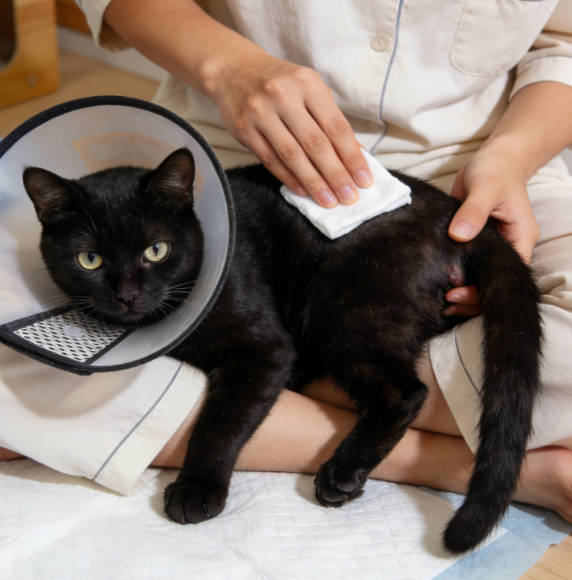
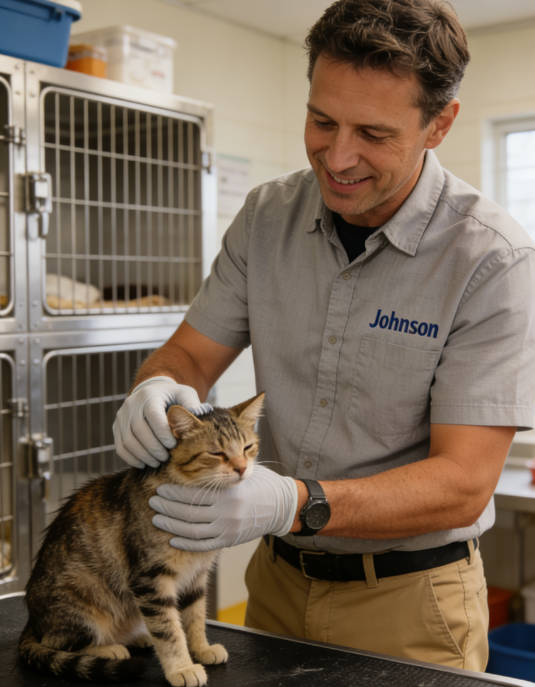
Many cat owners have probably heard the saying, “If you pull a cat’s tail, it will have diarrhea or lose control of its bathroom habits.” Is this statement actually true? And what causes it?
A cat’s tail is far more delicate than most people realize. Today, let’s take a closer look at a condition related to tail and spinal nerve injury in cats — Feline Cauda Equina Syndrome — and understand why pulling a cat’s tail can sometimes lead to serious consequences.
What Is Cauda Equina Syndrome?
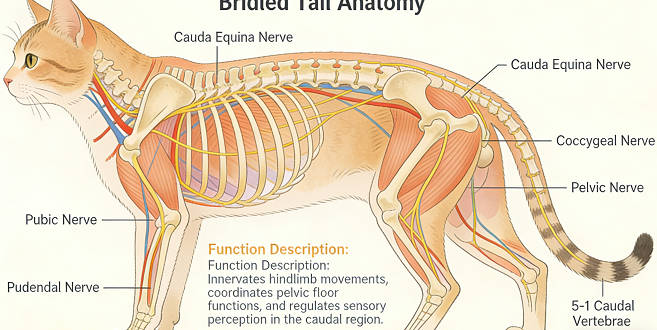
Feline cauda equina syndrome is a neurological condition caused by compression or damage to the cauda equina nerves. These nerves are located at the base of the tail and connect to the terminal portion of the spinal cord. In cats, the spinal cord extends along the back and typically ends below the conus medullaris around the level of the fifth lumbar vertebra.
This region is closely connected with multiple peripheral nerves, including the coccygeal nerve, pelvic nerve, pudendal nerve, and other surrounding nerve branches. These nerves play a critical role in hind limb movement, sensation, tail function, and bladder and bowel control. Because of this, any injury to the cauda equina can significantly affect a cat’s mobility and basic bodily functions.
When the cauda equina nerves are damaged, cats may show the following symptoms:
- Pain when the base of the tail is touched (associated with coccygeal nerve injury)
- Loss of tail movement and sensation, inability to lift the tail
- Inability to voluntarily control urination or defecation (which may include urinary retention, constipation, urinary leakage, or loose stools)
- Abnormal hind limb movement, poor coordination, unusual posture, or reluctance to move (associated with sciatic nerve involvement)
- Difficulty during toileting, resulting in feces or urine contaminating the tail due to the inability to lift it
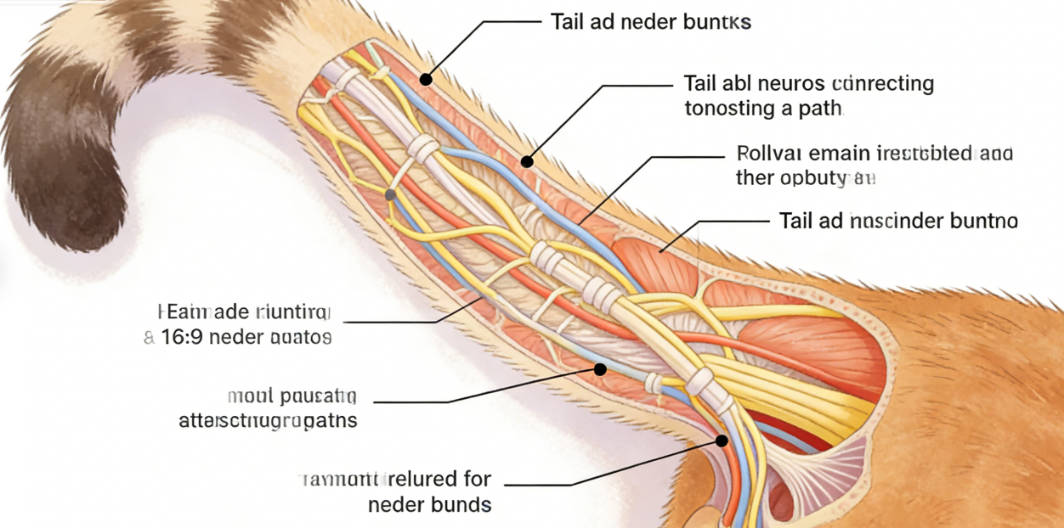
What Can Cause Cauda Equina Syndrome in Cats?
The causes of feline cauda equina syndrome generally fall into three main categories: congenital and age-related factors, trauma, and disease.
Congenital and Age-Related Factors (Less Common)
- Spinal dysraphism or developmental spinal abnormalities
- Narrowing of the spinal canal
- Degeneration of bodily functions in senior cats
Trauma-Related Causes (Most Common)
Common traumatic incidents include a cat’s tail being caught in a door, struck by a heavy object, stepped on (especially when the cat attempts to run away, causing a pulling force), or forcefully pulled by humans — a situation that unfortunately can occur when young children interact with cats without understanding their limits. Outdoor cats may also sustain injuries from bites or scratches near the base of the tail from other animals.
- 1. Direct Trauma
These forms of external force can compress, overstretch, or even tear the cauda equina nerves.
Falls from heights are a common cause of spinal injury in cats. When a cat jumps or falls from an elevated position, the spine — especially the lumbosacral region — may suffer fractures, dislocations, or contusions. Because the cauda equina nerves are located below the spinal cord termination at the lumbosacral nerve roots, spinal injuries in this area can easily involve these nerves.
- 2. Spinal Injuries
Traffic-related accidents may also cause severe spinal trauma, leading to cauda equina nerve dysfunction. The severity and extent of these injuries vary widely depending on the nature of the impact.
In some cases, nerve injury may occur during medical procedures such as surgery, anesthesia, or injections performed for unrelated conditions.
- 3. Iatrogenic Trauma
Disease-Related Causes
As cats age, intervertebral discs can undergo degenerative changes. The disc’s nucleus pulposus may protrude or herniate, compressing nearby nerve tissue, including the cauda equina. This compression interferes with normal nerve function and can result in cauda equina syndrome. The mechanism is similar to lumbar disc herniation seen in humans.
- 1. Intervertebral Disc Disease
Tumors located near the cauda equina region can gradually occupy space and exert pressure on surrounding nerve structures as they grow, leading to neurological symptoms.
- 2. Tumors
Certain bacterial infections may cause inflammatory responses affecting the cauda equina nerves. Some viral infections can also negatively impact the nervous system, contributing to nerve dysfunction.
- 3. Infections and Inflammatory Conditions
How Can Cats Recover?
Cauda equina syndrome is a neurological condition with multiple potential causes. If a cat shows abnormal behavior or symptoms, veterinary evaluation should be sought as early as possible. Diagnosis typically involves a combination of clinical observation, neurological examination, and imaging studies such as MRI, CT, or digital radiography.
Early intervention significantly improves the chances of recovery. Some nerve injuries may be irreversible, and delayed treatment often makes recovery more difficult.
The following treatment approaches are provided for general reference only. Actual treatment plans must be determined by a veterinarian based on the individual cat’s condition.
Surgical Treatment
- Decompression Surgery: If the cauda equina nerves are compressed by a herniated disc, bone fragments, or other space-occupying lesions, decompression surgery may be recommended. Removing the source of compression helps relieve pressure on the nerves. Timing is critical, as prolonged compression can lead to permanent nerve damage.
- Tumor Removal: When tumors are the underlying cause, surgical removal may be necessary. Benign tumors can often be fully excised to relieve nerve compression, while malignant tumors may require additional therapies such as radiation or chemotherapy. Surgical complexity depends on tumor size, location, and adhesion to surrounding tissues.
Medical Treatment
- Non-Steroidal Anti-Inflammatory Drugs (NSAIDs): These medications help reduce inflammation and pain associated with nerve compression or injury.
- Neurotrophic Medications: Mecobalamin is commonly used to support nerve repair and regeneration. Treatment duration varies depending on injury severity and recovery progress.
- Muscle Relaxants: If muscle spasms or tension occur, muscle relaxants may be used cautiously to relieve discomfort while avoiding excessive weakness.
Physical Rehabilitation
- Acupuncture Therapy: Acupuncture may serve as a supportive therapy by stimulating specific points to promote circulation and nerve function. Commonly targeted points include those associated with the lumbar and pelvic regions. While clinical research in cats is still limited, some cases show potential benefits.
- Laser Therapy: Low-level laser therapy may help reduce inflammation, relieve pain, and support tissue repair. Treatment parameters such as wavelength, power, and duration are selected by veterinary professionals based on the cat’s condition.
- Electrical Stimulation Therapy: Transcutaneous electrical nerve stimulation delivers mild electrical currents to stimulate nerves, potentially aiding pain relief, nerve regeneration, and muscle function when applied appropriately.
In daily life, milder cases often result from accidental tail pulling or minor falls affecting the tail vertebrae. Many shared recovery experiences emphasize integrative rehabilitation approaches combined with gentle daily care.
At-Home Care for Cats
In addition to medical treatment, rehabilitation training at home plays a crucial role in functional recovery. Cat owners can help in the following ways:
- Massage: Gentle, regular massage promotes blood circulation and reduces muscle tension. Start from the head, move along the spine toward the tail, and focus on the lower back and hip muscles. Limb massage can also improve circulation.
- Heat Therapy: Applying gentle heat to the lower back and hip area using a heating pad or infrared lamp can relieve discomfort and muscle tightness. Temperature should always be safe, and sessions should typically last 15–20 minutes.
- Controlled Activity: When physically appropriate, encourage light, controlled movement. Begin with short, slow walks and gradually increase duration as tolerated. Monitor the cat closely and stop if fatigue or discomfort appears.
- Bladder Training: For cats with bladder control issues, gentle manual expression may help support urination. Track urination timing, volume, and frequency, and gradually work toward improved control.
- Bowel Support: Dietary adjustments with appropriate fiber intake can help support bowel movement. Gentle abdominal massage may also assist. Any supportive aids should be used under veterinary guidance.
- Emotional Support: Cats may experience stress or low mood during illness. Providing companionship, gentle interaction, and familiar toys or treats can help maintain a positive emotional state, which supports overall recovery.
During recovery, rest is essential. Limiting jumping, running, and excessive tail movement is especially important.
Conclusion
After reading this, it becomes clear why pulling a cat’s tail should never be taken lightly. Accidental pulling or stepping on a cat’s tail should always be followed by careful observation. If any abnormal behaviors described above are noticed, prompt veterinary evaluation is strongly recommended.
Research on cauda equina syndrome is ongoing, and continued understanding will help improve outcomes for affected cats. Hopefully, today’s information helps cat owners better protect their feline companions and respond appropriately when concerns arise.
Comments (50)
Pet Lover
Great article! Very informative for pet owners.
Cat Parent
Thank you for sharing this helpful information!