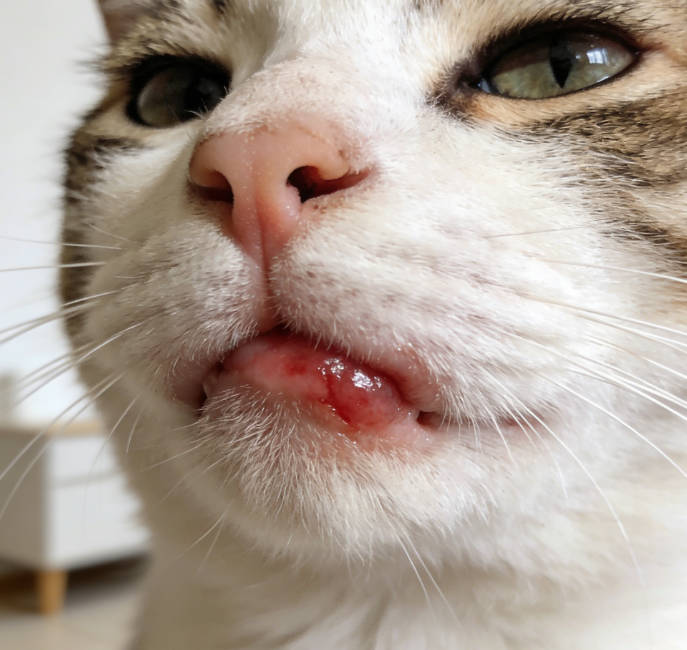
Many cat owners have noticed a small lump appearing on their cat's lip during petting. Often, the cat seems comfortable, and the lump may sometimes appear to resolve on its own. What causes these sudden small lumps? Today, we explore Feline Eosinophilic Granuloma Complex (EGC).
What Is Feline Eosinophilic Granuloma?
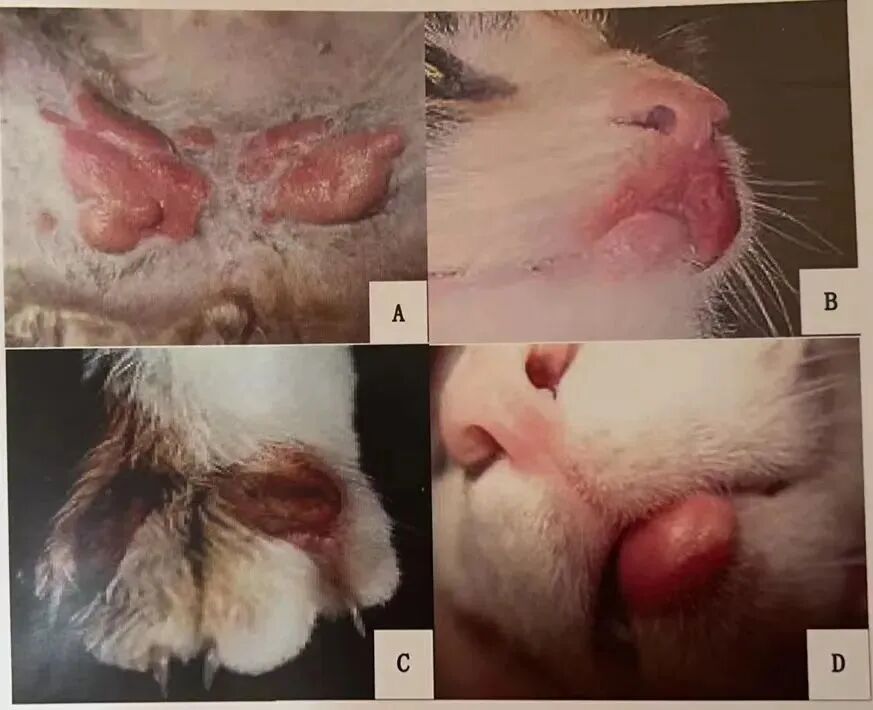
Feline Eosinophilic Granuloma Complex (EGC) is a group of skin and mucosal lesions associated with allergies and immune system irregularities. It can present in three main forms: 1) non-ulcerative or ulcerative lesions, 2) eosinophilic plaques, and 3) eosinophilic granulomas. Commonly affected areas include the upper lip, tongue, gums, ear flaps, or skin. The condition results from the over-accumulation of eosinophils, a type of immune cell, causing chronic inflammation. A lump on the cat's lip is just one manifestation of this condition.
The three primary forms of feline eosinophilic granuloma include:
- Eosinophilic plaque: This is an allergic reaction, often due to insect bites such as fleas or mosquitoes. Less commonly, food or environmental allergens may contribute. The lesions are raised, hairless, and itchy, often on the belly or inner thighs. Cats usually lick these areas frequently, keeping them moist.
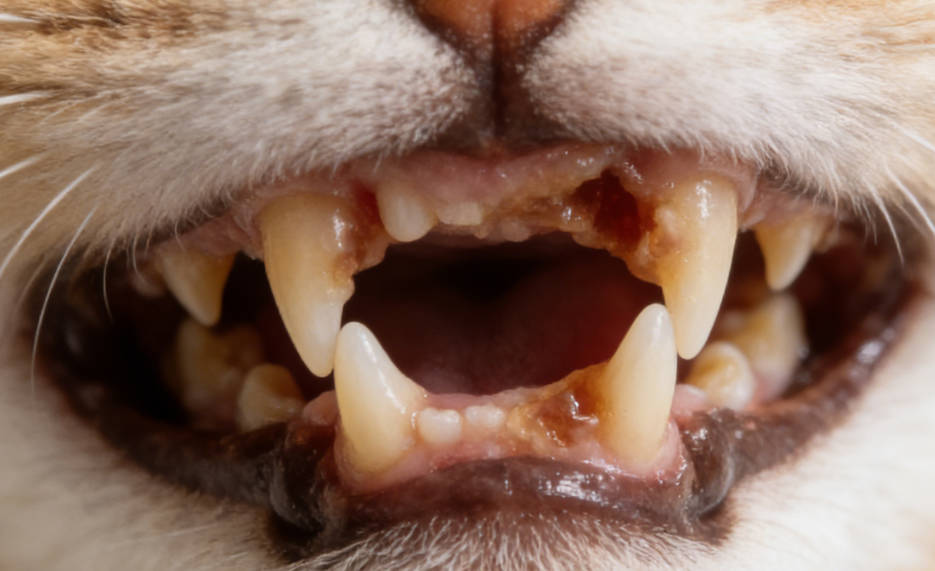
- Non-painful ulcer: Lesions are well-defined, commonly on the upper lip, sometimes affecting one side or both sides. They appear moist, crater-like, but are generally not painful or itchy and do not bleed.
- Eosinophilic granuloma (linear granuloma): Typically located on the back of the thigh, these raised, hairless, cord-like lesions may also appear on the paw pads, throat, or tongue. Some cats may show swelling or outward rotation of the lower lip or chin. Itchiness varies by location.
Why Does It Occur?
Similar to tooth resorption, EGC is a condition with clear clinical signs but a complex and not fully understood cause. In general, it involves abnormal activation of the cat’s immune system. Current research suggests several possible triggers:
- Allergic reactions:
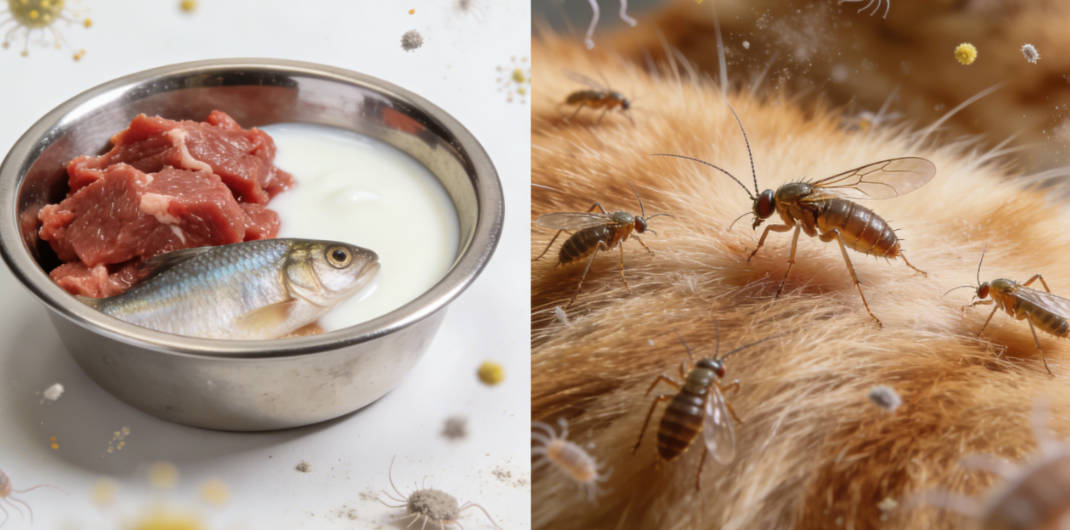
- 1) Food allergens: common ones include beef, fish, and dairy.
- 2) Parasite-related: insect bites from fleas or mosquitoes.
- 3) Environmental allergens: pollen, dust mites.
- Immune system imbalance: Some cats’ immune systems mistakenly identify harmless substances (including their own tissues) as threats, leading to eosinophil infiltration.
- Genetic predisposition: Certain breeds are more susceptible.
- Other contributing factors:
- 1) Dental disease: Periodontitis or tooth resorption may indirectly trigger EGC through inflammation.
- 2) Stress or hormonal imbalance: Changes in immune function may exacerbate the condition.
- 3) Foreign materials: Insect fragments or similar irritants.
- 4) Viral infections: Certain viruses may contribute.
Diagnosis and Treatment
– Clinical examination: direct observation of lesion location and features.
– Biopsy (histopathology): reveals numerous eosinophils; secondary infections may show neutrophils and bacteria.
– Skin histology (to rule out tumors or viral infection): shows nodular to diffuse granulomas with eosinophils, histiocytes, multinucleated giant cells, and collagen degeneration.
– Allergy testing: blood or intradermal tests can identify potential allergens.
- Diagnosis:
– Allergen control:
- Treatment:
- 1) Parasite prevention: monthly topical treatments.
- 2) Diet adjustments: try hypoallergenic or hydrolyzed protein diets.
– Medications:
- 1) Corticosteroids: short-term oral or injectable medications to reduce inflammation.
- 2) Immunomodulators: Cyclosporine A for long-term management with fewer side effects.
- 3) Topical treatment: steroid gels applied to ulcerated areas.
– Supportive care:
- 1) Maintain a clean environment and minimize allergen exposure.
- 2) Use an Elizabethan collar to prevent licking of lesions.
Conclusion
Most cats with EGC recover well after treatment. Management generally focuses on reducing inflammation, controlling immune response, and supporting overall health. While some cats may require longer treatment periods or are prone to recurrence, many cases are mild, and controlling allergens—such as parasites or specific foods—often leads to improvement. Proper care and monitoring usually result in a positive outcome.
Comments (50)
Pet Lover
Great article! Very informative for pet owners.
Cat Parent
Thank you for sharing this helpful information!